Education for balanced development in school – PACE
Parliamentary Assembly COUNCIL OF EUROPE

Committee on Culture, Science and Education
Mr Anatoly Korobeynikov
The handbook contains the report “Education for balanced development in school”, which was presented at the Parliamentary Assembly of the Council of Europe. The report proves that non-medical and first of all pedagogical methods produce the strongest effect in forming healthy way of pupils’ life. In the adopted recommendation to this report as well as in the reply of the Committee of Ministers Council of Europe to these recommendations it is proposed to carry out studies on the interdependence of education and pupils’ health. The results of the research could be used by the member-states of the Council of Europe.
1. INTRODUCTION
1. Education is an essential commodity. Economic growth is not merely a matter of accumulating material wealth and services, but also of developing knowledge and creative skills, and creating conditions conducive to balanced personal development. Economic competition between states has shifted from the production sector to science and education.
2. In today’s world the ultimate aim of education must be to develop balanced individuals capable of adapting in a varied, rapidly changing world.
3. Balanced individual development depends essentially on the individual’s health. However, there is growing concern about the steady decline in schoolchildren’s health. Schools are clearly a reflection of society and do not bear all the responsibility for their pupils’ problems. The balanced development of children and young people depends on a whole range of socio-economic, environmental and cultural factors, and it is unfair to blame schools alone for children’s health problems, for example, when most of the blame clearly lies outside the school system.
4. Specialists have increasingly focused on “school risk factors”, however, which include stress linked to teaching methods, an organisation of teaching and extracurricular activities incompatible with pupils’ biorhythms, and inadequate teaching methods (out of phase with the children’s age and stage of functional development). Little research appears to have been done into these risk factors and little is known about them, yet they are the cause of considerable physical and emotional stress, inevitably leading to the deterioration of children’s health, undermining the vitality of successive generations and gradually destroying the genetic heritage.
5. Although young people in western Europe remain among the healthiest in the world, there are problems there too. According to the WHO European Office, alcohol kills almost 55,000 young people in Europe every year. Between 60 and 70% of Europe’s young people have tried smoking by the age of 15, the highest levels being recorded in Greenland, Germany, Slovenia and Ukraine.1 In some European countries the situation is even more alarming because of the serious socio-economic problems and the lack of material and financial resources in the education infrastructure.2
Percentage ofpupils who consider their state of health average or poor3
|
Country |
Girls age 11 |
Boys age 11 |
|
Ukraine |
43.7 |
27.2 |
|
Lithuania |
35.3 |
23.4 |
|
Russia |
34.4 |
22.3 |
|
Greece |
32.1 |
13.4 |
|
Croatia |
15.8 |
11.2 |
|
Netherlands |
14.2 |
12.2 |
|
Denmark |
14.5 |
10.9 |
|
Austria |
15.9 |
8.6 |
|
Hungary |
14.0 |
9.9 |
|
Poland |
14.4 |
9.7 |
|
Spain |
4.4 |
5.3 |
Percentage of pupils who consider they are in good health
|
Country |
Boys age 11 |
Boys age 15 |
Girls age 11 |
Girls age 15 |
|
France |
62 |
55 |
53 |
40 |
|
Austria |
55 |
46 |
51 |
37 |
|
Finland |
46 |
46 |
39 |
37 |
|
Russia |
38 |
29 |
23 |
14 |
|
Poland |
31 |
25 |
26 |
13 |
|
Estonia |
26 |
24 |
23 |
10 |
These tables show the very different perceptions schoolchildren in different European countries have of their state of health. In Spain, for example, only 4.4% of 11-year-old girls consider their health to be poor to middling, while in Ukraine the figure is 43.7%. The same applies at the other end of the scale: in France 62% of 11-year-old boys consider themselves in good health, compared with only 38% in Russia.
6. Although the United Nations Convention on the Rights of the Child, particularly in articles 3.3 and 24.2, attaches priority to the healthy development of children, it contains no machinery for implementing this fundamental idea. Nor is there any such provision in most domestic legislation. As a result, the education systems in many countries barely allow for the fact that the complex health problems affecting schoolchildren stem not only from medical causes but also from a combination of risk factors found in schools. Without substantial changes in the education process, making full allowance for pupils’ ages and personalities, it is impossible, even with the educational means available and substantial medical assistance, to reduce the threat to their health and improve their chances of balanced development. The solution to all these problems requires a coherent approach at both the national and the European level.
2. EDUCATION IN EUROPE
7. Europe has rich cultural and educational traditions. It has known the scholasticism of the Middle Ages, the humanism of the Renaissance period and the pragmatism of the bourgeoisie. Yet Europe has given the world scores of the most prominent humanists, including Rabelais, Montaigne, More, Campanella, Pestalozzi, Ushinsky and many others. Their ideas about human fulfilment remain pertinent and appealing even today.
8. This is why Europe’s governments and institutions continue to do their best to ensure that their educational systems are worthy of the continent’s outstanding traditions. The Council of Europe has always taken an interest in educational issues. The European Cultural Convention (1954) and the Cultural Fund form the framework for its activities in the field of education. The Steering Committee for Education deals with educational matters in Europe on a daily basis. The Standing Conference of European Ministers of Education of the Council of Europe member states meets once every three years. In spite of the constant efforts of most European States and international organisations, there is no denying that education today fails to rise to the challenges of our times and must therefore be reformed and improved.
9. Access to basic education is already general in Europe: almost the whole population has received primary education and basic secondary education. However, political and economic changes in Eastern Europe have not had much effect on basic education. The main reason for this is insufficient budgetary resources.
10. In the Rapporteur’s opinion the following fundamental principles in the field of education are on the agenda for many European countries:
i. giving all children access to proper pre-school education;
11. developing a positive attitude to education and culture in all children and young people;
iii. preserving and building up children’s health at school and making balanced individuals of them;
iv. providing teachers with more scope for creative initiative;
v. improving the quality of teaching and education by including the values of humanism;
vi. systematically involving parents and society at large in matters concerning schoolchildren’s development;
vii. defending universal democratic values, while allowing for each country’s traditions and for inter-cultural exchange;
viii. developing the principles of democratic self-management in schools;
ix. facilitating the exchange of new information and experience and seeking common solutions to health problems in the European school community.
2.1 WHO European network of health-promoting schools
11. The European Network of Health-Promoting Schools (ENHPS) is a programme of the WHO European Office aimed at creating a group of “model” schools where emphasis is placed on promoting pupils’ health. The idea of such schools was first put forward at the beginning of the 1980s. The first experiment was attempted in 1991 in Hungary, the Czech Republic, Slovakia and Poland. The Council of Europe, the European Commission and the WHO signed an agreement to develop the project under their joint aegis. The programme was officially adopted in 1992.
12. The purpose of these experimental schools is to promote health and provide a healthy environment in which to live, work, study and develop. These results are achieved through an effective partnership between teachers, pupils, parents and civil society. The schools are characterised by a complex approach aimed at providing healthy living conditions for staff and children. Their role is to create means and possibilities of monitoring and improving the health of pupils and teachers. This also means adapting their management structures and teaching methods. Special attention is paid to discouraging smoking, providing healthy school meals, monitoring health and hygiene, the safety of school buildings, and also to developing democracy in schools, being more open to the outside world and addressing the problems of violence, oppression and fear.
2.2 The situation in Russian schools
13. According to official Ministry of Public Health statistics, only one third of schoolchildren in Russia enjoy a satisfactory state of health, compared with 50% ten years ago. The percentage of children in very good health is no higher than 10% for the youngest pupils, 6% for middle-school pupils and 3% for the older classes. The workload in upper secondary schools is greater than the norm, while the time devoted to physical exercise is two or three times less than is physiologically necessary. By the end of secondary schooling 50% of pupils have health problems that affect their choice of profession or fitness for military service. It is becoming a serious national security problem for Russia.5 The question of the positive or negative effects of education on children’s health in nursery and other schools is not being given the attention it deserves by the authorities, in spite of the public concern it generates every year.
14. There is a link between pupils’ and teachers’ health. The results of surveys carried out in St Petersburg show that 67% of teachers consider their health unsatisfactory or poor. Only 40% do not suffer from stress. The strain on teachers is bound to rub off on their pupils sooner or later.6
15. Physical development of pupils at a school in Serguiev Possad (near Moscow) in 1996:
Number ofpupils concerned per class
|
Physical development parameter |
9A |
9B |
9C |
9D |
Total |
|
Delayed biological development |
11 |
4 |
9 |
9 |
33 |
|
Spinal deformation |
20 |
20 |
20 |
18 |
78 |
|
Flat feet |
22 |
23 |
22 |
18 |
85 |
|
Weight problem |
13 |
12 |
13 |
9 |
47 |
|
Poor eyesight |
14 |
7 |
8 |
4 |
33 |
|
Total number of pupils in class |
23 |
23 |
22 |
18 |
86 |
Various factors not related to the school environment are obviously at work here, but the school environment is not alien to this situation, which is fairly typical of Russian schools.
16. Teaching techniques have been developed in Russia which clearly show that it is possible to tackle these different school-related pathologies using pedagogical techniques alone, without medical intervention. These health preservation techniques are used in thousands of Russian schools, with excellent results. In school number 103 in Jeleznogorsk, for example, gender- differentiated teaching is practised in the primary classes. In the period from 2001 to 2005 between 23 and 35% of final-year pupils obtained better marks. All the boys are fit for military service, their eyesight is three times sharper than in ordinary schools and they have no spinal deformations.7 In Russia as in other countries of eastern Europe, experience shows that gender-differentiated teaching in primary education can produce positive results. This raises the question of redesigning curricula for boys and girls and training teachers to teach the new curricula. Experiments in numerous schools in Europe in this field should help to harmonise teaching in primary classes.
17. In Russia the first teaching methods aimed at preserving pupils’ health by making class work more dynamic appeared in 1979. At the time the Soviet Medical Science Academy recommended applying them in schools. The founder of the theory and practice of these methods was the Doctor of medicine Dr Bazarni. Later, in 1989, these methods were approved and recommended by the Russian Ministry of Health in the form of the federal programme: “Primary prevention methods for school-related pathologies”. The system uses teaching methods based on psycho-physiological laws that help to release the child’s physical and mental potential. It includes separate classes for boys and girls, the organisation of dynamic classes (involving more movement), visual stimulation of the imagination and other teaching methods.
18. In the Russian Federation a bill is in preparation to amend the part of the Education Act concerning pupils’ health priorities. It will make schools more responsible for health matters. Regular checks must be carried out on pupils’ health to evaluate school-related pathologies.
3. THE LINK BETWEEN EDUCATION AND HEALTH
19. The positive or negative link between the education process and schoolchildren’s health does not get the attention it deserves from public authorities and NGOs. The success of health promotion programmes also depends on the quality of teaching programmes and whether they are conducive to the healthy physical, mental and social development of pupils.
20. The WHO defines health not only as the lack of disease and physical defects, but also as a state of full physical, mental and social well-being. Preserving and improving health, in this broad sense of the word, is not only a personal matter but one of concern to society as a whole.
21. The education process must be suitable for the child and must adapt to the child’s capabilities, not the other way round, where teaching is imposed on the child, with all the unhappy consequences that entails. We must also do away with all the causes of violence in schools and consider the possibility of preparing a special charter to tackle this problem.
22. The adverse effect of school risk factors is exacerbated by the fact that they act in combination, over a long period of time. The various symptoms develop gradually and do not attract the attention of teachers, doctors and parents until visible pathologies develop. The continuous intensification of the education process places children under greater stress. Constant stress leads to nervous exhaustion and, in children, to fatigue, headaches and sometimes swelling of the thyroid gland. UNICEF and WHO recommend the compulsory iodisation of salt. This is an important recommendation, but one which addresses the consequences rather than the cause. As early as the 18th century doctors linked the causes of “school goitre” to the school environment.8 In the 20th century Russian researchers demonstrated that the development of goitre in schoolchildren is directly proportional to the pressure on the pupils. This widespread swelling of the thyroid gland in schoolchildren is the result of unsuitable teaching methods.
23. The passage from primary to secondary education is a time when children are more vulnerable, as the information they are required to assimilate grows in quantity and complexity. Appraisal becomes more important, and even essential. Teacher-pupil relations and relations between the pupils themselves become more complex, with a correspondingly greater risk of conflict situations arising.
24. Parents, the public and politicians must seriously address the excessive “physiological cost” of obsolete and new untested educational techniques. The issue is all the more important as there are teaching methods in all European countries that more or less do away with the problems of “school diseases” altogether.
25. In many schools, especially in Eastern Europe, there is a great need for pre-school and school facilities for children who are frequently ill, children with musculoskeletal, speech, eyesight, hearing or mental disorders, etc. These children’s needs should be catered for not only in polyclinics and health centres but directly in educational establishments.
26. It takes time and considerable effort by governments and societies to raise public awareness of health issues and radically change adults’ attitudes to their own health and that of their children. Continuity of education and successful results are achieved through the combined efforts of families and schools, on the basis of shared views on the balanced development of children. In order to improve the impact of family relationships on the development of children and adolescents, the lifestyles of children and parents must be studied and compared, and conclusions drawn to serve as a basis for concrete action at the national and local level.
27. The following measures should help to protect and improve health in schools:
i. laying the foundations for school teaching methods that respect children’s health;
ii. monitoring children’s and young people’s health;
iii. assessing the efficacy of health-promoting measures taken by schools;
iv. setting up health protection structures;
v. training serving and future teachers in healthy teaching methods.
4. THE HEALTH OF CHILDREN AND YOUNG PEOPLE AS A BASIS FOR HEALTHY LIVING
28. Physical training is often considered essential to schoolchildren’s physical development. As a subject of study, however, it is approached from the rather narrow perspective of mere physical exercise and an incentive to practise sport. Physical training can help to develop dynamic individuals and contribute to their physiological, physical and mental improvement. Team sports must be practised in schools not only for physical development but also to develop a spirit of solidarity.
29. Although there are various approaches to preserving and improving schoolchildren’s health (nutrition, ecology, hygiene, preventive medicine, remedial pedagogy, etc.), attention to health in education and the encouragement of physical activity are the two most important factors, playing an essential role in the development of the body’s physical, but also mental capacities.
30. The time children spend at school is also important. Children generally become much less physically active when they start school. In conventional teaching only 10 to 18% of the time children spend in school is devoted to physical activities. As a result, children become less adaptable and tonic, and lassitude sets in. According to the WHO European Office, most young people are physically passive. Fewer than 40% meet the minimum weekly requirement for physical activity.9
4.1. Schoolchildren and physical activities and sport (as a %)10
A Norwegian researcher found that out of 229 first-year pupils only 5% carried themselves properly.11 This cannot be remedied simply by increasing the number of physical education lessons and sports clubs. Ordinary lessons must be made more dynamic, without detriment to the educational content, so that children can satisfy their natural need for movement. Strange as it may seem, this approach makes children more attentive, more motivated and keener to learn.
|
Country/Region |
Do no sport at all |
1-4 hours per week |
4 hours per week or more |
|
Austria |
10 |
39 |
51 |
|
Germany |
14 |
38 |
48 |
|
Denmark |
15 |
46 |
39 |
|
Finland |
17 |
47 |
36 |
|
Wales |
18 |
59 |
23 |
|
Hungary |
19 |
45 |
36 |
|
Norway |
19 |
49 |
32 |
|
Belgium |
22 |
37 |
31 |
|
Scotland |
22 |
51 |
27 |
|
France |
23 |
45 |
32 |
|
Poland |
23 |
54 |
23 |
|
Sweden |
25 |
47 |
28 |
|
Estonia |
29 |
45 |
26 |
|
Northern Ireland |
29 |
46 |
25 |
|
Czech Republic |
33 |
44 |
23 |
|
Lithuania |
37 |
37 |
26 |
|
Spain |
40 |
44 |
16 |
|
Latvia |
46 |
43 |
11 |
|
Russia |
47 |
39 |
14 |
31. One of the main tasks of education is to impart national and global values, taking the best cultural works as examples. Schools must help children and young people to understand that a healthy and peaceful life depends on harmony between the spiritual and the material, the personal and the public, the national and the global.
32. Considering the imbalance between education and upbringing, and the very low level of spirituality in modern society, Council of Europe member states must give priority in their education policies to the work ethic, moral values, the law, culture and the environment.
33. Nowadays schools try to impart too much information. Often however, a mind trained to take in facts is disconnected from moral values and therefore stunted in its development. The German scientist Weissmantel said: “Discovering how to exploit the unexplored creative capacity children possess will have even greater consequences than the discovery of atomic fission”.12
34. Today mental health problems in children are steadily increasing. Nervous disorders and negative physiological and psychological development indicators in children and young people are real. The WHO conference in Helsinki in 2005 examined mental health issues and made it clear that some two million young people in Europe suffer from mental health problems. In June 2005 our Parliamentary Assembly adopted a report on “Improving the response to mental health needs in Europe”.
Mental health of pupils in Germany in 2002™
|
|
Pessimistic (%) |
Optimistic (%) |
|
More frequently prone to stress |
68 |
58 |
|
Frequent loneliness |
62 |
50 |
|
Frequent exhaustion |
64 |
48 |
|
Quick to tire |
58 |
43 |
|
Frequent back aches |
42 |
34 |
|
Frequently nervous |
41 |
27 |
|
Inability to concentrate |
34 |
20 |
|
Poor health |
36 |
18 |
|
Sleep disorders |
27 |
12 |
|
Often sad |
36 |
10 |
35. What are the reasons behind this picture? There are many reasons, but the fact that five days a week pupils spend much of their time at school suggests that parents and teachers should do more to correct and improve the psychological atmosphere in schools. The ever increasing demands of the education process regularly lead to stress in pupils. Surveys carried out in Latvia under the WHO project on children’s health in Europe showed that 52% of pupils were afraid of their teachers and that over 46% were subjected to humiliation.14 And in the United Kingdom, six out of ten boys and seven out of ten girls say that school lessons make them very tense.15 At the same time an interesting experiment conducted in Latvia on co-operation between doctors and teachers revealed that after two years the health of younger pupils in an experimental school was better than in an ordinary school.
36. Repeated physical violence, verbal harassment and intimidation in schools are an increasingly disturbing problem. In London a survey carried out at the request of the Mayor, Ken Livingstone, revealed that more than 60% of pupils considered bullying a serious problem in the city’s schools. A survey carried out by the National Society for the Prevention of Cruelty to Children (NSPCC) showed that 90% of young girls were victims of persecution and two teenage girls out of three confessed to bullying their peers, without feeling the slightest pangs of guilt. In view of the gravity of the situation and the fact that other Council of Europe member states experience similar problems, the rapporteur proposes in the draft recommendation preparing a European charter to combat violence in schools, or strengthening the existing legal instruments.
37. In many countries of Europe suicides account for a large share of mortality among young people. A hundred years ago those who attended the international congress on school hygiene in Nuremberg in 1904 reached the following conclusion even then: children at school are chronically overworked, which has negative effects on their development and health.16
38. In schools all over Europe teachers and all the other parties involved must be perfectly aware of the importance of: developing a healthy lifestyle in pupils and their parents; designing lessons in such a way that pupils do not consider them as a pointless chore; teachers’ awareness of the place the subject and classes they teach occupy in the general task incumbent on teachers of promoting balanced development; imparting knowledge to pupils, but also motivating them and interesting them in the subjects studied and the world around them.
WHO statistics on children who enjoy school (as a %)17
|
Country/Region |
Girls age 11 |
Boys age 11 |
|
Austria |
60.4 |
59.8 |
|
Portugal |
58.4 |
38.9 |
|
Greece |
55.2 |
48.1 |
|
Germany |
52.5 |
47.5 |
|
Latvia |
47.8 |
37.2 |
|
Norway |
44.1 |
42.3 |
|
Belgium |
33.0 |
22.3 |
|
Poland |
30.6 |
22.8 |
|
Hungary |
30.4 |
21.9 |
|
Ireland |
30.3 |
20.4 |
|
England |
28.4 |
25.2 |
|
Ukraine |
28.4 |
21.7 |
This report also analyses the pressure of school work on children, which differs from country to country. The older the children — the more they feel the pressure. 15-year-old girls feel the pressure more than boys the same age, whereas no such difference exists in the 11-13 age group. The greatest pressure on children in all age groups is found in Lithuania and Malta, where almost 44% of 11-year-olds and 65-80% of 13-15-year-olds say they feel under great pressure at school. In the Netherlands, Belgium and Germany, on the other hand, children feel under much less pressure. The pressures school places on children must be taken into consideration when monitoring children’s health in school.
39. The purpose of teaching balanced development is not to increase the health care dispensed to children in school but, on the contrary, to reduce the frequency of medical consultations. It should also attenuate the effects of congenital disorders and prevent new health problems. Ideally education should not jeopardise health but help to improve it.
40. Drinking, smoking and drug consumption are a deplorable sign of the deterioration of children’s health in Europe. In France, for example, about 25% of 18-year-olds are cannabis consumers.18 Statistics show that the situation is also worrying in Germany.
Percentage of smokers in the 12 to 17 age group in Germany1
|
Year |
Old federal Lander |
New federal Lander |
|
1993 |
21% |
20% |
|
1997 |
27% |
34% |
|
2001 |
26% |
33% |
Alcohol consumption in the 12 to 19 age group in Germany (2001)2
|
|
Rarely or never drink |
Drink once a week |
Drink more than once a week |
|
Boys age 12-19 |
30% |
39% |
31% |
|
Girls age 12-19 |
40% |
20% |
40% |
|
12-13 age group |
85% |
1% |
14% |
|
14-15 age group |
50% |
16% |
34% |
|
16-17 age group |
21% |
37% |
42% |
|
18-19 age group |
22% |
37% |
41% |
The rapporteur is convinced that the appeal of these drugs stems from lack of affection or the state of depression young people feel. The results of a number of surveys show that most pupils fairly often suffer from loneliness, anxiety, fear and lack of affection. This is fertile ground for drug addiction. To fight this scourge it is therefore preferable to resort to pedagogy rather than repression or even medical treatment.
41. Council of Europe member states should develop and introduce awareness-raising activities to alert young people to the long-term risks of smoking, drinking and drug consumption, as well as measures to prohibit the sale to and consumption by children and adolescents of alcohol, tobacco and psychoactive substances.
42. It is important to provide all children and adolescents, particularly children of immigrant populations, with equal social and cultural opportunities and services conducive to a healthy lifestyle. The low level of social protection enjoyed by migrants, the language barrier and the need to adapt to new social and geographical conditions can trigger neuroses, weaken immunity systems and generally undermine their health. As the number of children of immigrants is bound to increase in some Council of Europe member states, the relevant European institutions need to carry out systematic research on their development and their state of health.
5. THE PROBLEMS AND PERSPECTIVES OF HEALTH-PROMOTING EDUCATION
43. The modern general education system is not working, partly because it is based not on methodological considerations that take children’s needs into account, but on the amount of information transmitted. The tendency to choose between broader or deeper knowledge is not the answer. The former is economically unsound, and the latter unrealistic, as it undermines children’s and teachers’ health. There is a third way, however: to reconsider the strategy and purpose of teaching and the methods used, then to review teachers’ professional skills and the manner in which education is managed.
44. The aims of the education system should be redefined to include both the transfer of information and techniques conducive to balanced development. All children should learn to read and improve their ability to express themselves orally and in writing, as well as developing their taste for music and the arts, all of which are essential to harmonious development.
45. In recent years certain European countries have been more concerned with poor performance in schools than with schoolchildren’s health. At the same time, they are forgetting that what children get out of their schooling is not just a matter of knowledge and experience, and that their physical, mental and social well-being also depend on it in many ways. This problem is so widespread that it requires the combined efforts of schools and municipal, national and European authorities.
46. The causes of poor health in schoolchildren are not only medical but also pedagogical and material. They include:
i. the increasingly heavy workload.
ii. the disappearance of the values of work and art from the basic school curriculum;
iii. the fact that ignoring the particularities of each child hinders the development of gender-specific imaginative and emotional faculties, allowing for no differentiation;
iv. the replacement of sloping, child-size desks by standard-size flattopped desks (where the angle of vision distorts the letters).
47. In order to contribute fully to the balanced development of schoolchildren and children in pre-school establishments, education must be built on:
i. full knowledge of the children’s health and intellectual faculties, and measures to improve them;
ii. educational methods, programmes, textbooks and school facilities developed in an education psychology and social medicine perspective.
48. The widespread use of computer technology in education is a problem which deserves special attention. It considerably increases the amount of information with which a person has to deal and is tiring for the eyes, which can lead to chronic fatigue. This makes the development of methods and techniques to protect schoolchildren’s eyesight particularly urgent. Daily computer use contributes to the appearance of asthenopia (eye strain). This situation calls for action on the part of computer engineers and the computer industry in general.
49. In order to improve the work of European schools to ensure the balanced development of children and young people, the Council of Europe and UNICEF could help to improve the criteria for assessing education programmes, teaching methods and textbooks, taking into account the schoolchildren’s age and mental and physical characteristics.
50. The media have a powerful influence over children’s tastes and behaviour which could usefully be evaluated in a separate report. Research is needed to determine the exact role of the mass media, particularly television and the Internet, in their intellectual and moral development. Producers of television programmes and films, videos, computer games and electronic publications should be encouraged to develop products that help children and young people to develop their moral values and creative abilities.
51. Unfortunately the media tend to consider children as consumers who are easy to influence. The information they impart does not always take into account the age, gender and geographical differences between these young consumers. It is important to sound out the views of children and adolescents on their everyday problems, their needs and their grudges against society and the adult world. A European Internet site on education and health should be developed.
52. Despite the abundant literature on health issues, many countries still lack information on the basic health needs of young people. The Council of Europe, WHO, UNICEF and other international organisations could join forces to increase the circulation of literature on balanced development and health promotion and foster the wider dissemination of literature on children’s health in pre-school institutions and schools. The Council of Europe could take the initiative to produce a series of books for parents on child health and development, and help to produce European encyclopaedias on the subject (based on translations of national publications).
6. THE SCHOOL ENVIRONMENT AND CHILDREN’S HEALTH
53. In order to protect the health of children in school and pre-school institutions, it is important to check the printed matter, toys and equipment they use from the health and hygiene standpoint. At the 4th Ministerial Conference on Environment and Health, held in Budapest on 24 June 2004, it was announced that over five million children die every year as a result of unhealthy living conditions. In Europe thousands of cases of non-compliance with health and safety standards for children’s products are registered every year. For the record, most toys which do not meet the required standards are made in China.
54. Nutrition is another problem that must not be overlooked when considering products for children. This issue must be addressed in the form of a partnership between schools and parents. In some countries school meals are well organised. In Spain, for example, parents and schools work together to guarantee food quality and most children actually eat better at school than at home. In Liverpool, in the United Kingdom, school meals are free for 80-90% of primary school pupils. In many European countries menus are drawn up by nutritionists.
55. In 2003 the European Forum on “Eating at School — Making Healthy Choices” was held in Strasbourg. Participants focused mainly on obesity among schoolchildren, which is a problem in many Council of Europe member states which affects one third of all girls and one fifth of all boys according to the WHO European Office. By way of an example, in 1995 only 9.6% of children in England between 2 and 10 years of age were overweight. By 2002 the figure had risen to 15.5%. Where they do not already exist, therefore, strict controls are needed to improve the quality of school food, which should be high-quality and at the same time affordable.
56. A child’s body can absorb up to 50% of the lead present in food products, compared with 10% for adults. Lead is particularly dangerous for a child’s brain. Between 15 and 18 million children in the less developed countries suffer from irreversible brain damage caused by lead poisoning. In Europe 4.4% of children have the same problem.21
57. School furniture can also be harmful to children’s health and development. According to research by Professor P. Bacle (United Kingdom), 36% of children in the 11-14 age group suffer from back pain because of school furni- ture.22 The widespread use in school furniture in certain countries of woodchip and fibre boards bonded together with formaldehyde resins is also bad for the health.
58. The Council of Europe’s member states must develop national action plans to prevent environmental hazards to children’s health, including in the school environment. They should contribute more actively to the implementation of the Action Plan for children’s environment and health in Europe (Budapest 2004). In Croatia, for example, all school equipment is inspected annually and school kitchens and catering facilities are also regularly inspected.23
59. All the countries of Europe should introduce a stricter health classification for products for use by children and define stricter health regulations for application to school supplies.
7. MONITORING CHILDREN’S HEALTH
60. In the modern context, it is extremely important to monitor schoolchildren’s physical, mental, moral and intellectual health. Instead of costly medical check-ups, which are generally infrequent and often superficial, an effective means should be found of monitoring children’s physical and mental health in schools on a permanent basis.
61. This monitoring could be based on:
i. taking into account the children’s age and also biological and environmental factors;
ii. combining two monitoring techniques — official statistical reports and the individual monitoring of schoolchildren’s health;
iii. cross-checking information on schoolchildren’s health with data from other sources, in particular health protection bodies;
iv. official standards concerning school curricula, workload, teaching methods and content;
v. systematic assessment of the impact of the educational environment on children’s health.
62. It is important that the monitoring data be comparable within each country and from one Council of Europe member state to another. Developing health databases at the school, municipal, regional, national, and pan-European levels would make it possible to determine priorities for preventive measures, parallel action and readjustments. It is the job not only of the education authorities, but of authorities at all levels who are responsible for coordinating the activities of the different government departments, to identify the underlying links between causes and effects and to detect “school risk factors” in time for the proper administrative decisions to be taken without delay.
63. The main goal of education is not to impart information but to develop physically and mentally mature individuals. This means using teaching methods that suit the age and individual characteristics of schoolchildren, not piling too much work on younger pupils, assessing curricula and textbooks from a psycho-pedagogical and physiological viewpoint, systematically monitoring the teaching dispensed and persuading health and education ministries to organise medical check-ups jointly at the end of every school year.
64. Initial and further professional training for teachers must include training in the preservation and promotion of pupils’ health. Teachers and other school staff are not sufficiently aware of the possible negative effects of the school environment on pupils’ health. Furthermore, teachers’ salaries in eastern European countries oblige them to take on additional work, too much of which can have an adverse effect on their health, and in many cases on their work and their relations with their pupils, and ultimately on the quality of the education they dispense and on their pupils’ health. The “healthy teacher — healthy pupil” principle must be encouraged in every possible way.
65. The Council of Europe could recommend to the governments of its member states, in co-operation with WHO and UNICEF, organising regular seminars on health at school in training centres for school doctors and nurses, teachers, child psychologists, gym and sports teachers and school administrators.
66. Every effort should be made to co-ordinate the work of the different government departments involved in education, health, culture, welfare, environmental protection and physical training and sport. This co-ordination should include national, regional and municipal programmes to protect pupils’ health. Steps must also be taken to improve the legal framework in this field.
67. Efforts should also continue to improve information and awareness activities warning young people about the long-term risks of smoking, drinking and drugs, while at the same time discouraging violence at school. The value of good health and healthy living should be taught by teams of teachers, doctors, psychologists and other specialists. Co-operation between the Council of Europe and WHO in the framework of the health-promoting schools network should be reinforced.
68. The Council of Europe should pay special attention to more effective co-operation between national bodies, international organisations and research centres in elaborating health-promoting programmes for schoolchildren and ensuring the timely detection of abnormalities in children’s development at different ages.
69. Education in healthy living and harmonious development must be matters of national priority. In every country schools should transmit the values of health and healthy living, thereby protecting the lifeblood of the nation.
70. In view of the ever increasing flows of migrants in Europe, serious consideration needs to be given to the possibility of drafting a European convention on school and pre-school education for children of immigrants and children adopted abroad, or to extending the Council of Europe’s existing legal instruments.
71. National Parliaments should pass laws regulating the responsibilities of teaching establishments, education authorities and governments vis-a-vis the health of children in schools and pre-school establishments.
72. When we think about young people, we feel that we can influence the future. We know that many necessary things can wait, but not where children are concerned. We must do all we can to make the balanced development of children and young people a reality, not just a dream.
1 Facts and figures, the WHO European Office, Copenhagen, 8 September 2003.
2 Press release, the WHO European Office, 3 June 2004.
3 Currie C et al., eds. “Young people’s health in context. Health Behaviour in School-aged Children”, (HBSC) study: international report from the 2001/2002 survey. Copenhagen, WHO Regional Office for Europe, 2004.
4 Komkov et al., “physical activity, health and lifestyle of schoolchildren”, international conference documents, 1996.
5 Report on children’s health in the Russian Federation, Moscow, 2004.
6 Documents of the international conference on “Health, teaching and education in the 21st century”, Moscow, 2004.
7 Documents of the international conference on “Health, teaching and education in the 21st century”, Moscow, 2004.
8 D. Pissarev, in the journal “Enseignant”, No. 9, p. 216, 1865.
9 WHO European Office press release, June 2004.
10 Documents of the international conference on “Physical education, sport and the health of the nation”, 1996
11 Henrik Seyffarth, TA VARE PA KROPPEN I DAGLILGIVET, Universitetsforlaget.
12 Documents of the international conference on “Health, teaching and education in the 21st century”, Moscow, 2004.
13 Schwerpunkt des Gesundheitsberichterstattung des Bundes. Gesundheit von Kindren und Jugendlichen. Robert Koch-Institut, Berlin 2004.
14 Documents of the 2nd international conference on “Sport and Health”, 2004.
15 “The Times”, 22 June 2004.
16 The essential tasks of school hygiene, Odessa, 1904.
17 Currie C et al., eds. “Young people’s health in context. Health Behaviour in School-aged Children”, (HBSC) study: international report from the 2001/2002 survey. Copenhagen, WHO Regional Office for Europe, 2004.
18 WHO European Office press release, June 2004.
19 Schwerpunktbericht des Gesundheitsberichtestattung Gesundheit von Kindren une Jugendlichen. Robert Koch-Institut, Berlin 2004.
20 Komkov et al., “physical activity, health and lifestyle of schoolchildren”, international conference documents, 1996.
21 WHO European Office press release, June 2004.
22 Mednovosti.ru documents.
23 Report of the Ministry of Education and Sport of Croatia.
RECOMMENDATION 1750 (2006)
1. The Parliamentary Assembly believes that an essential task of schools is to ensure the balanced development of pupils, enabling them to adjust to a varied and rapidly changing world. Though their main task is to convey knowledge, schools should also help in preserving and improving the health of pupils and promote health education and universal values. The World Health Organisation (WHO) defines health not only as the lack of disease and physical defects, but also as a state of full physical, mental and social well-being.
2. The information technology revolution is intensifying the education process. Ensuring that the added pressure does not harm schoolchildren’s health is a new task calling for co-operation among politicians, teachers, doctors and other specialists.
3. The Assembly considers health, as well as intellectual development, to be essential ingredients in the overall development of children and young people. The Assembly notes that in some Council of Europe member states the state of health of school and pre-school pupils gives cause for concern. In some countries children suffer from illnesses which, to a certain extent, are linked to the school environment and living conditions, such as spinal deformation, myopia, neurasthenia, nervous exhaustion and swelling of the thyroid gland. The problem of obesity linked to an unbalanced diet in certain European countries is also causing serious concern.
4. Various factors may have a negative effect on children’s health, including social and economic hardship, environmental disturbances and unsuitable school and pre-school infrastructure.
5. Other causes of unbalanced development are linked to risk factors in the school system which have not been sufficiently studied and understood by society, such as ergonomic factors. Risk factors at school affect children’s health in complex ways, not necessarily coming to the attention of teachers, doctors and parents until the symptoms become visible, which may be much later.
6. Many schools in the Council of Europe’s member states successfully practise teaching methods which take pupils’ health into account. More specifically, these methods are used in the WHO European network of healthpromoting schools. In this respect, the Assembly stresses the importance of continuing and stepping up this co-operation between the Council of Europe, the European Commission and WHO which has been going on since 1992.
7. The Assembly expresses deep concern about the health effects of the consumption by young people of alcohol, cigarettes and drugs and about the increasing violence. It also refers to its Recommendation 1169 (1991) on education for health and drugs misuse in the member states of the Council of Europe and the European Community. In so far as this problem is also the consequence of educational stresses, it has to be addressed by means of improvements to the education system.
8. In general, a proactive approach should be fostered, in which the following principles are applied:
8.1. only teaching methods should be used which help to improve children’s health or their balanced development and which take their age and individual particularities into account;
8.2. psychologists, education specialists and doctors should be effectively involved in the development of teaching methods and infrastructures;
8.3. a health culture should be forged through various disciplines, including sex education;
8.4. high quality physical and sports education should be provided;
8.5. healthy food should be served for school meals;
8.6. every child’s health and development should be monitored throughout schooling;
8.7. information on child’s health should be gathered and exchanged among member states.
9. The Assembly believes that a health education component should be incorporated into training programmes for teachers and other school staff. Parents, pupils, psychologists, doctors and social workers should be regularly kept abreast of developments and co-operation between parents and teachers should be improved.
10. The Assembly notes that the media and advertising have become a major influence on young people. The media, particularly television, should be more aware of the importance of children’s and young people’s health. The media should be encouraged to promote balanced individual development.
11. The Assembly considers that healthy living and the balanced development of schoolchildren should be priorities in the Council of Europe’s member states. Accordingly, it recommends that the Committee of Ministers:
11.1. strengthen the WHO European Strategy for child and adolescent health and development, for example by launching an awareness campaign;
11.2. collect and analyse, in close co-operation with UNICEF, WHO and other interested organisations, basic data on illnesses which may be linked to the school environment and carry out studies on the interdependence of education and health. The findings could then be used by the Council of Europe’s member states to devise national policies;
11.3. consider the possibility of drafting, in close collaboration with other competent international organisations, a European charter to combat youth violence and reinforce existing mechanisms;
11.4. identify, study and promote best practices in health protection in the school environment;
11.5. invite the governments of members states to:
11.5.1. organise initial and in-service teacher training to include the health dimension in teaching;
11.5.2. pay special attention to protecting the health of immigrant children, in view of their low level of social protection, the language barrier and the need for them to adapt to a new social and geographical environment and climate.
REPLY FROM THE COMMITTEE OF MINISTERS ADOPTED AT THE 984th MEETING OF THE MINISTERS’ DEPUTIES
(17-18 JANUARY 2007)
DOC. 11128, 22 JANUARY 2007
1. The Committee of Ministers took note with interest of Recommendation 1750 (2006) of the Parliamentary Assembly on education for balanced development in school, which it brought to the attention of the governments of member states and forwarded to the Steering Committee for Education (CDED), the European Health Committee (CDSP) and the Public Health Committee (Partial Agreement) (CD-P-SP) for information and possible comments.
2. The Committee of Ministers fully endorses the point of view expressed by the Assembly in paragraph 1 of its recommendation that “schools should help in preserving and improving the health of pupils and promote health education and universal values”. In this connection, it wishes to point out that, besides the other players responsible for the health of young people, such as parents, voluntary organisations, doctors and institutions, schools are the most appropriate structures for providing health education.
3. Indeed, the changes that have come about in Europe’s social and economic situation and in related lifestyles sometimes have a worrying influence on health, particularly the health of young people. An appropriate response would be to adopt a “proactive” but, at the same time, comprehensive approach in which knowledge transmission is accompanied by the appropriate and “balanced” organisation of the school environment, educational activities and preventive work, together with appropriate teacher training. The Committee of Ministers wishes to draw attention in this context to Recommendation No. R (88) 7 on school health education and the role and training of teachers and to its Resolution ResAP(2005)3 on healthy eating in schools.
4. With regard to the measures advocated by the Assembly in paragraph 8 of the recommendation, the Committee of Ministers agrees that “high quality physical and sports education” should be provided, insofar as it is recognised that the provision of regular and adequate physical education and sport in the school curriculum for all age groups is highly beneficial for health. Furthermore, the Committee of Ministers believes that lessons in physical education and sports also provide a context for teaching important values such as tolerance and fair play, experience in winning and losing, social cohesion, respect for the environment and education for democratic citizenship. In this connection, it underlines the importance of the principles and objectives promoted in the CDED’s programme on education for democratic citizenship, such as the participation and involvement of pupils in discussion and decision-making processes relating to the organisation of school life.
5. The Committee of Ministers agrees with the Assembly that the media, particularly television, also exercise considerable influence on young people. The media should be involved as responsible actors in the discussions with civil society on dietary habits and their impact on health, by focusing on positive image building and raising awareness through educational efforts on the basis of food based dietary guidelines.
6. With regard to the Assembly’s recommendations in paragraph 11, the Committee of Ministers acknowledges that it is important to ensure the balanced development of schoolchildren in all schools in member states. It cannot give priority to the proposal that specific projects concerning the aspects mentioned in paragraphs 11.2, 11.3 and 11.4 of the recommendation be incorporated into the programme of activities of the relevant intergovernmental committees, but notes with interest the idea to carry out studies on the interdependence of education and health of the pupils in co-operation with UNICEF, WHO and other international organisations in the course of 2007-2008, provided that the funds for this purpose be submitted in the form of voluntary contributions.
Mr KOROBEYNIKOV Anatoly — doctor of philosophy, member of the Council of the Federation of the Federal Assembly of the Russian Federation, member of the Committee on Culture, Science and Education of the Parliamentary Assembly of the Council of Europe (Socialist Group), Chairman of the All-Russian public movement “Russian union for the health development of children”, ex-first Vice-Minister of education of USSR.
Research: Cellular-genetic energy of students with different modes of learning
Health building technologies in education
MOSCOW REGION LABORATORY FOR HEALTH DEVELOPING PEDAGOGIES.
Dr of Medicine V.Bazarny
Health building technologies in education
The mankind had long ago submitted to the fact,that education leads inevitably to the health’s loss.
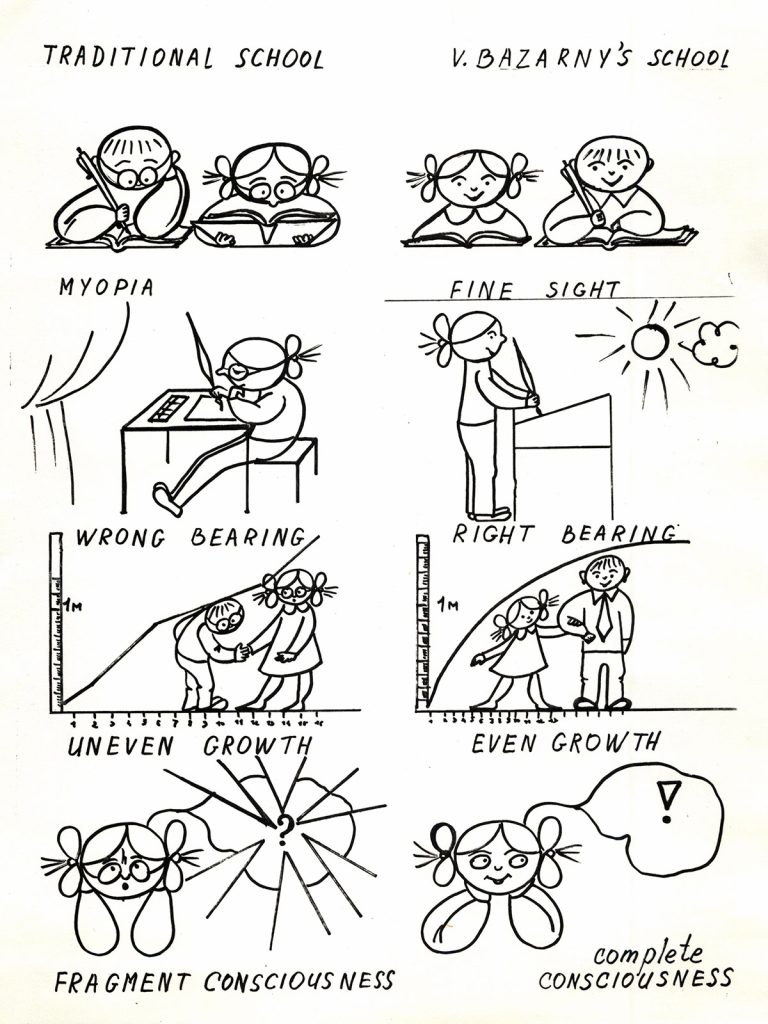
Hypodynamia,myopia,neurosis,heart diseases.mental disorders – these are the traditional children’s concomitants at European mass schools.
Science has made many attempts to improve the educational methods in order to diminish school’s negative influence on children’s health. But any appreciable results haven’t been reached yet. On the contrary, the intensification of educational process,the broadening of the information’s amounts, computerisation the application of televised and other technical systems at schools have made it much more destructive for children’s health.
And what is more: the researches of many years have established,that school’s pathology is the begining of so called illnesses of adult’s civilization forming ( heart diseases, nervous & mental illnesses, backbone & vision sicknesses ).
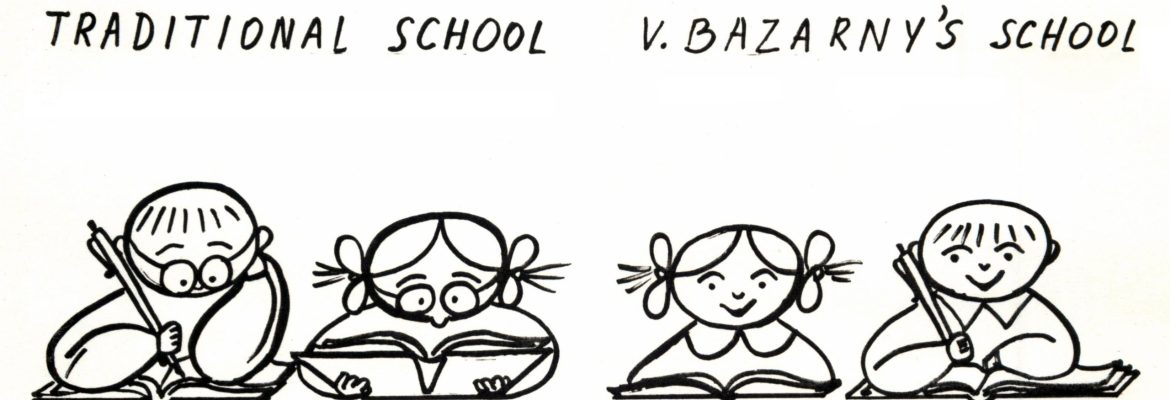
Under the existing conditions, in eminent opinion of foreighn scientists of our country,the results, achieved by Dr. of Medicine V.Bazarniy & his colleagues, are prominent. There have been developet simple & effective technologies of teaching on the base of V.Bazarniy’s fundamental recearches of many years, which allow not only to preserve children’s health, but to strengthen it largely. Practically, there are no near – sighted children in the classes, applying V.Bazarniy’s teaching methods. The morbidity inn such classes is considerablu lower than in those, using traditional teaching methods.
Bazarniy’s teaching process organization technologies’basic principles are :
1. The early sensory children’s development & sensory didacties predominance at early staqes of teaching ( 3-10 years old )
2. Visual space broading & it’s special organization in the process of teaching.
3. The dynamical pose regimen application in the process of teaching.
4. The proportion of bookish & verbaal methods sharp reduction at knowledge transmittion owing to elaboration & useing special wide frame ecological walls (stands ) of sensor grammar.
5. The use of the didactic material, which is mobile in three – dimensional space and realization of lessons in the regimen of visual horizons.
6. The application of visual & manual senses integration special technology during graphic skills mastering.
7. Special technical methods application in the process of mastering the art of reading.
8. Special ophthalmological & ergonomical methods of the educational process organization application.
9. The use of special furniture,desighned with the application of new ergonomical conception.
10. Tye application of the sencor simulators in the educational & cognixable process & others.
Patents,copyright & certificates of invention protect many of the technologies.
The researches & experiments shows that the application of the devised methods not allows to preserve children’s physical health,but have a benefical influence on child’s consciousness & mental abilities development.
Today,the introduction of given technologies proceeds successfully among mass pre-school & school institutions in many regions of Russia & the CIS.
These technologies are simple in use & they’re accessible for any schoolteacher or educator.
A series of the universities in England,Finland,the USA & Canada show persistent interest for the technologies.
The laboratory offers the organizations & private persons,interested in health development technology receipt & it’s inculcation:
1. A series of lectures of acquaintance(from 3 to 12 lectures). The sources of health destruction at the traditional European school. Fowards the pedagogy of healthy developmemt.
2. The literature for publications, translation (monographs, booklets, albums).
3. A series of technical devices,furniture & means of sencor didactics delivery.
4. Licences delivery.
5. Educational specialists training.
6. The realization of international conferences.
7. Lecturing under the auspices of the UNESCO.
Laboratory for Health Developing Pedagogies,
Red Army Prospekt 136, Sergiev Posad, Moscow Region, Russia.
The argument against co-ed schools
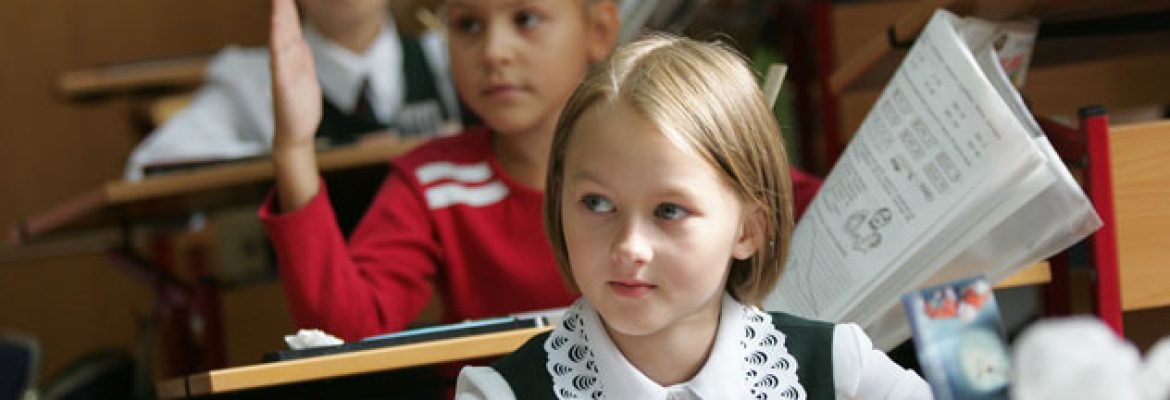
Experiments by academicians and child-specialists in Russia have shown that boys and girls who study in separate classrooms perform better in studies and extra-curricular activities and are even healthier than their co-ed counterparts.
The classrooms in Moscow’s School No. 760 are different from those in other elementary schools across the capital. Alongside the usual school desks are some special benches, where they can do their schoolwork standing up. Every fifteen minutes they switch places; those who were sitting now stand up and vice-versa.
Several times during the lesson they have a special workout and eye-training exercises, where they ‘catch’ the light-beams from different light-bulbs around the classrooms. It sounds like no big deal. But the results paint a different picture. 23% of Moscow schoolchildren suffer from short-sightedness, but only 12% have it at School No. 760.
This isn’t where the differences end. The children only use fountain pens, which have to be dipped in ink. Apparently, letting first-graders write with ballpoint pens can cause health problems. “Research shows that children who use ballpoint pens have delayed breathing and an irregular heartbeat. After 20 minutes of continuous writing, signs of angina develop,” says School Director Vladimir Garmash. “But when writing with a fountain pen, the child’s hand works in impulse mode; first tension, then relaxation, and no damage to their health arises.”
Another hazard for first-graders is the school desk, especially an unsloped desk, which forces the child into a constrained and tense posture for long periods. All of these simply implemented and affordable methods were developed more than 30 years ago through the research of Russian professor Vladimir Bazarny. He reached the conclusion that most health problems of adult life arise from school days, especially during the earliest years of schooling.
The most significant cause is stress, which infants suffer when deprived of the opportunity to move. If they have to sit for long periods in an artificial posture behind an uncomfortable desk, a kind of ‘nowhere to go’ nervous energy emerges, which results in burn-out and consequently in ill-health. This can appear as an enlargement of the thyroid gland, and problems of the spine and heart. Yet if the child can change posture and do some work standing up, such problems are unlikely to occur.
Another important precept of Bazarny’s methodology is segregated education for boys and girls in parallel classes, especially at primary schools. They’re able to play together during their breaks but during the lessons, they are divided into different classrooms.
In pre-Revolutionary Russia, all schools were divided into separate boys and girls sections. However the Bolsheviks abandoned this practice as a ‘relic of the past.’ After the Second World War there was an attempt to return to segregated classrooms, but it didn’t last long. Segregated education is nowadays considered a facet of elite education. It’s not coincidental that it is practiced in the most expensive private schools in Britain, Germany, Japan and the USA.
Now, thanks to Professor Bazarny’s research, a few schools in Russia have returned to this system. The results have been astounding, especially in cases where separate and mixed classes have existed in parallel. At the ‘Harmonia’ Lyceum in Zheleznogorsk (in Krasnoyarsk Region, Siberia), they’ve practiced Bazarny’s methodology for more than 20 years. While mixed classes may have produced one outstanding pupil per class in that period, the segregated classes have nearly 25–35 percent of such outstanding pupils. While only 46–52 percent of boys in mixed classes were found suitable for military service, 100 percent of boys in segregated classes met the criteria.
What are the secrets behind such widely differing results? Dr Natalya Kuindzhi, a doctor of medical science working at the Russian Institute of Hygiene and Children’s Health at the Russian Academy of Medicine, has been researching the physiological results of segregated education for many years. Her conclusions are clear: the whole issue is connected to the differing rate of mental development between boys and girls.
For pre-schoolers, the right brain develops faster than the left brain regardless of gender. However, by the time children join school, girls display significantly higher left-brain development, while boys continue to be dominated by right-brain activity. We should remember that the brain’s right hemisphere is responsible for activities involving creativity and imagination, while the left hemisphere governs logical thinking. Later on these differences balance out – but in the early stages of schooling they play an important role, in that boys and girls have differing perceptions of information.
Boys see things more figuratively and emotionally. They can more easily do creative work, they don’t see mistakes in words; they see information holistically, rather than in detail. For boys, the idea is more important than establishing rules. Girls on the other hand find remembering guidelines far easier. They can take down dictation easier, they see mistakes in words more clearly, and work well within a system. This puts girls at a greater advantage within a school situation. They meet teachers’ expectations fully in standard exercises and are primarily directed towards obedience and rote learning. Boys find it hard to compete.
It’s hardly surprising that going by Professor Kuindzhi’s data, within mixed classes we find that for every one girl who is failing in school there are 5–6 similarly failing boys whom teachers have written off as either lazy or stupid. We may never know what these children may have achieved if they studied in segregated classrooms.
“Boys dislike long introductory discussions and want to get drawing immediately. But with girls you need to spend time explaining what they are supposed to do,” says Marina Reznikova, a teacher of drawing at Moscow Grammar School No. 1257, where they have held segregated classes for many years.
The results of this kind of approach to education are very convincing. For the last twenty years, the children leaving Grammar School No. 1257 have all, without exception, gone on into Higher Education, with many going to the most prestigious universities. Medical research shows that by their late-teens, children from segregated schools display significantly higher standards of physical fitness and academic prowess and have a greater capacity to work.
Around 2000 schools in Russia today work on the principles established by Dr Vladimir Bazarny. Perhaps this number is too little? For example, many parents end up disappointed when trying to enrol their children in Grammar School No. 1257 as the prestigious school can only accept half the number of applicants each year. Many parents are ready to drive their children to the school every day from the opposite end of Moscow. Teachers say that modern-day parents are well-informed and know exactly what they want from schools.
The question here is not just about health, although it is an important issue. Segregated education offers an individual approach to each child, giving them better chances to realise their full potential. This is what’s known as an elite education.
Photo: The classrooms in Moscow’s School No. 760. Source: ITAR-TASS

Physical Immobility and sedentary is civilization disease
Documentary about sedentary problem in our culture.
Director: V.Berchun
Duration: 30 minutes.
HEALTH-DEVELOPING REGIMES OF TEACHING OF CHILDREN IN KINDERGARTEN AND AT SCHOOL
It is known that in the course of studies miopia , faults of posture , cardiovascular , neuropsychic and the other vegetative disturbances occur in half and more pupils.
Works of Вагагnу V. Ph. et al. provide evidence that the present unfavourable situation was promoted by routine ways of transmission of information and regimes of teaching. The data obtained enabled to offer a new approach to the ways of transmission of information and regimes of teaching of children.
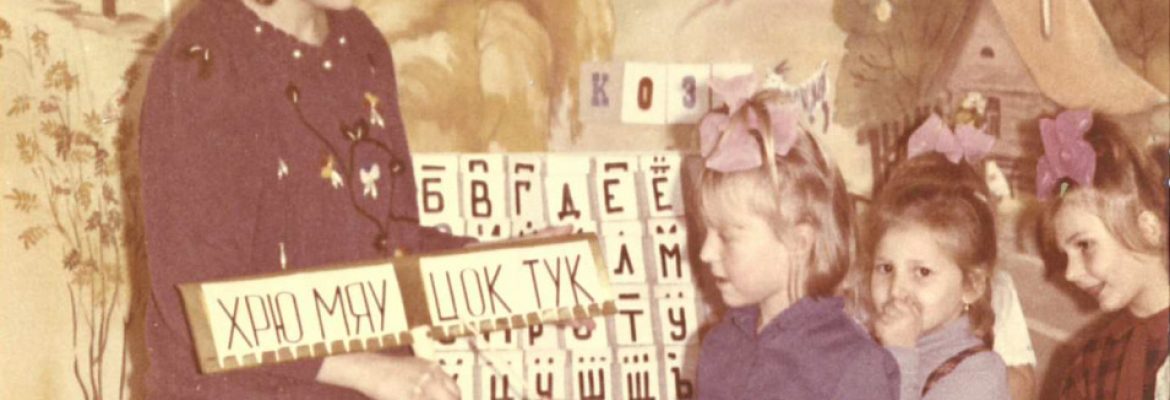
They are as follows: techniques of the bookless teaching rapid reading and impulse handwriting , methods of the lesson giving in the regime of dynamic noses and sensor training devices as well as various techniques of individual hygiene of educational and cognitive activities.
Introduction of the worked out system was established to decrease the incidence of the school pathology forms 1.5-2.5 times.
Department of Sensitive Organs offers its assistanse based on a contract to any Foreign clinic.
Doctor of Medical Sciences Vladimir Bazarny
Department of Sensitive Organs
Siberian Department of the USSR Academy of Medical Sciences
(Director Konstantin R. Sedov , Academician of the USSR AMS)
Please contract at the address:
Institute of Northern Medical Problems ,
1-C Partisan Zheleznyak St. Krasnoyarsk 660022 USSR
System of Vladimir Bazarny
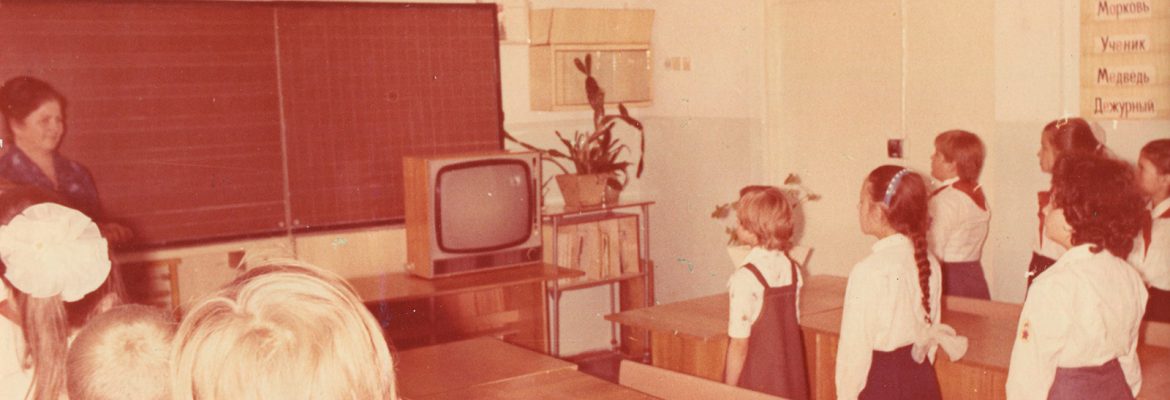
SYSTEM OF DR. VLADIMIR PH. BAZARNY AND HIS DISCIPLES IS A WAY FROM THE HEALTH-DESTRUCTIVE TO HEALTHDEVELOPING UPBRINGING SYSTEM. IT IS A PREVENTIVE TREATMENT OF DISEASES CAUSED BY OVERSTRAIN OF PUPILS AND GROWN-UPS DURING THE EPOCH OF SCIENTIFIC AND TECHNOLOGICAL REVOLUTION AND INFORMATION SOCIETY.
The scientific and technological revolution as well as informatization of along with many benefits have evoked also stormy growth of the so called diseases of civilization [diseases of heart, mind, backbone, vision and others]. As a result of research carried out under supervision of Vladimir Ph. Bazarny, MD at the Faculty for Developing Sensor Systems [Institute for Medical Problems of the Northern Peoples, Siberian Dep. of the Academy of Medical Science, USSR], there have been stated the primary roots of their emerging These are: the traditional ‘European’ setup of the lesson, teaching methods and ways of transition of information, as well as some latest brand new school reforms. To understand all this it,s enough to enter a classroom of the primary school students and to see how our children write, draw or read. We will see that during the classes most of the children assume an unnatural bent posture and having grabbed the pen, literally move their noses upon their book or writing book.
Such irregular posture as it may be seen has turned out to be just a reflection of their extreme internal strain, which includes sensor, psychogenic and neuro-vegetative mechanisms. 11,s been stated that children’s being in such a state for continuously long a time is a basis for arresting and suppressing their development, including the whole class of diseases of strain caused by the school period [myopia, neuro-psychic and cardio-vascular deviations, spine pathologies and others], from which the overstraining diseases of grown-ups of the scientific and technological revolution emerge and develop.
As a result of the carried out research mechanisms of facilitating the forming and supporting of school students in the conditions of the above mentioned strain have been revealed. These mechanisms are:
- Lack of science based strain-free technologies for children’s acquiring reading and writing techniques;
- Holding classes with children in traditional sitting postures and in the mode of truncated book deadlocks which don’t allow the free development of neurodynamic processes in the brain;
- Misbalanced accelerated ‘over-jump’ from the sensual [related to the right brain hemisphere] to the verbal [left hemisphere] methods of teaching and passing the information;
- Finally, such world-wide school reforms as changing the old feather pen for the globe-pen and the desks with the bent surface for the ones with the horizontal.
As a result of the carried out research a new direction of science has been worked out, which synthesizes the theory of teaching and the theory of developing of health, — Health Developing Pedagogic. It includes the principles of no straining mastering of reading and writing techniques from early childhood, holding classes in the mode of vertical positioning of the body and of the dynamic postures, panorama vision and visual horizons, orientating-searching activity and sensory drilling facilities, devices for individual and group hygiene of visual labour and mush more.
The system having been tested in many areas of this country and in a number of countries abroad has proved to be highly effective for freeing the process of physical and mental development of children, including preventing strain caused diseases during the school period [myopia, cardio-vascular and neuropsychic deviations, body bearing disturbances and others which are the basis for strain caused diseases of grownups, now that society undergoes its scientific and technological revolution and keeps becoming real information society.
Vladimir Ph. Bazarny M.D.
Partizana Zheleznyaka, 1 ‘B’
Institute for Medical Problems of Northern Peoples at the Siberian Dep. of Academy for Med. Sc. USSR
SU-660022 Krasnoyarsk, USSR
PEDAGOGICAL BASIS FOR MASS DEFECTS IN VISION IN THE YOUNG GENERATION OF THE NATIVE PEOPLES
PEDAGOGICAL BASIS FOR MASS DEFECTS IN VISION IN THE YOUNG GENERATION OF THE NATIVE PEOPLES – PERSPECTIVES TO SOLVE THE PROBLEM
Institute for Medical Problems of the Northern Peoples, USSR Academy of Sciences, Siberian Department, Krasnoyarsk, USSR
8th International Congress on Circumpolar Health, Whitehorse, Yukon, May 20-25, 1990
The health potential of the Northern Native peoples of the USSR has been forged and formed for thousands of years in the most extreme environment of our planet, their vision being the very basis for their life preservation. In living conditions of this kind the quality of the gene pool has been crystallized by evolution. And this would surprise to a great extent those who have imagination and logical thinking. Its a puzzling fact, but up to 60% to 70% of the school leavers among the Native northern peoples are suffering with vision disturbances. But they used to be great snipers and hunters. What kind of destructive force has penetrated into the lifestyle of the young and growing generation?
We started to try analyzing this problem about 15 years ago. It was stated that the causes for breaking the mechanism destined to support the normal evolution of the visual system is deeply rooted in the peculiarities of conceiving the child and in those of ante- and postnatal development period. Those factors are: Alcohol addiction and tearing off the usual pattern of the diet (abrupt “European” orientation). But the vision system was most destructively influenced by the organization of the teaching process accrording to the European model, which turned out to be catastrophic for the northern Native children. For instance, it was stated that the traditional ways to transmit the information and to teach found themselves in an antagonistic contradiction with the ethno-ecological functional requirements of the developing visual system. Let’s consider and call the most important ones.
So, the contradictions are as follows:
1. Contradictions between a need of functioning in a mode of a wide panorama and distant vision on the one hand and systematic bedding classes in a mode of truncated book deadlocks which hamper the development of neurodynamic process on the other.
2. Contradictions between the prevailing sensory-visual nature of pereeptirm and thinking on the one hand, and overloading with verbal code information in the curriculum on the other.
3. Contradctions between the children’s reduced ability for visual and elemental anatysis of pluralities under tbe conditions of short range vision on tbe one hand, and overloading with this very analysis in tbe present school programmes on the other.
4. It’s a big contradiction between the reduced ability of the children for long performing of the visually controlled manual processes and overloading of the current programmes with writing.
5. It’s a contradiction between their adaptability to functioning under the extreme conditions and their high susceptibility to the prolonged effect of twinkling light.
The above mentioned etno-ecological peculiarities of perception and of thinking as well as those of actions in the system of the pre-school and school upbringing and teaching has resulted in tbe fact that tbe prevailing state observed in the children during their education is excessive general tension that includes sensory-psyihogenic mechanisms as well as motor-coordinatory and neurovegetative ones. The children’s tension is manifested by their excessive bend over the book or notebook while reading or writing.
It was established that in the course of education the degree of manifestation and prevalence of a number of school pathologies (myopia, scoliosis, cardiovascular and neuropsychic disturbances), was related to tbe degree of tbe pupil’s bend and tension.
It should be noted however that not only the schoolchildren of the northern Native peoples remain in the state of tension and abnormal postures. Therefore educators often and always keep trying their best to make the pupils sit straight, by calling them to do so. But here is just one example to illustrate the situation which could be created by such approach. In the nineteenth century special hard bars were offered to use them as a preventative from the low bend of tbe children during the classes. Those bars were placed between the pupil’s forehead and the desk. But the force that made the children bend down was too big to resist to it, and in tbe course of certain time instead of myopia and scoliosis deformity of the cranial bones emerged and developed. So, for conclusion of this example we may say that if we really consider human life and health as the top priority among other bonuses, including our own learning, we are bound to bring about a wide scope reorganization of the whole teaching process. For this purpose more than ten years ago we worked out certain energy-saving and health-preserving principles of the teaching process design which don’t require the body’s tension. With a goal of improving the effect of sensory organs functioning including the children’s coordinatory abilities a method for dynamic postures was elaborated. This method consists of the following; during the classes the children should either stand for a certain period of time or then sit. Standing is at a special land of furniture.
Certain ecological principles for designing the teaching process have been worked out as well. They are as follows:
1. A method for teaching rapid reading without a book;
2. Holding classes in a mode of visual horizons and mobile handouts;
3. Methods for establishing certain modes of the leading educational and cognitive system (the eye-hand system), including health-saving modes of introducing into writing.
For preventing the children from overstraining during the classes a system of individual and group sensory training facilities have also been proposed. They are supposed to secure the individual and group hygiene of vision.
The proposed health-saving methods for teaching have been and are being approved to a great extent in various regions of our country. It’s been shown rather convincingly that introducing such methods into practice enables decreasing the rate of school pathologies, including myopia, from 1,5 to 2,5 times. Note should be made of the fact that the system under discussion proved to be highly effective also in the framework of the ordinary secondary school for general education. It’s positive effect has been confirmed by a number of the foreign colleagues who follow the present trend. Taking into account that many highly developed nations such as the USA, Japan, Great Britain and others are troubled by the problem of the school generated kinds of pathologies; and according to the viewpoint of Professor Golt, director of Child Health Institute at the University of London, there are good reasons for bringing the results of the present work to the notice of the world at large. For our part we express our complete readiness to pass the present methods on a contractual basis to all countries concerned, as well as through UNESCO.
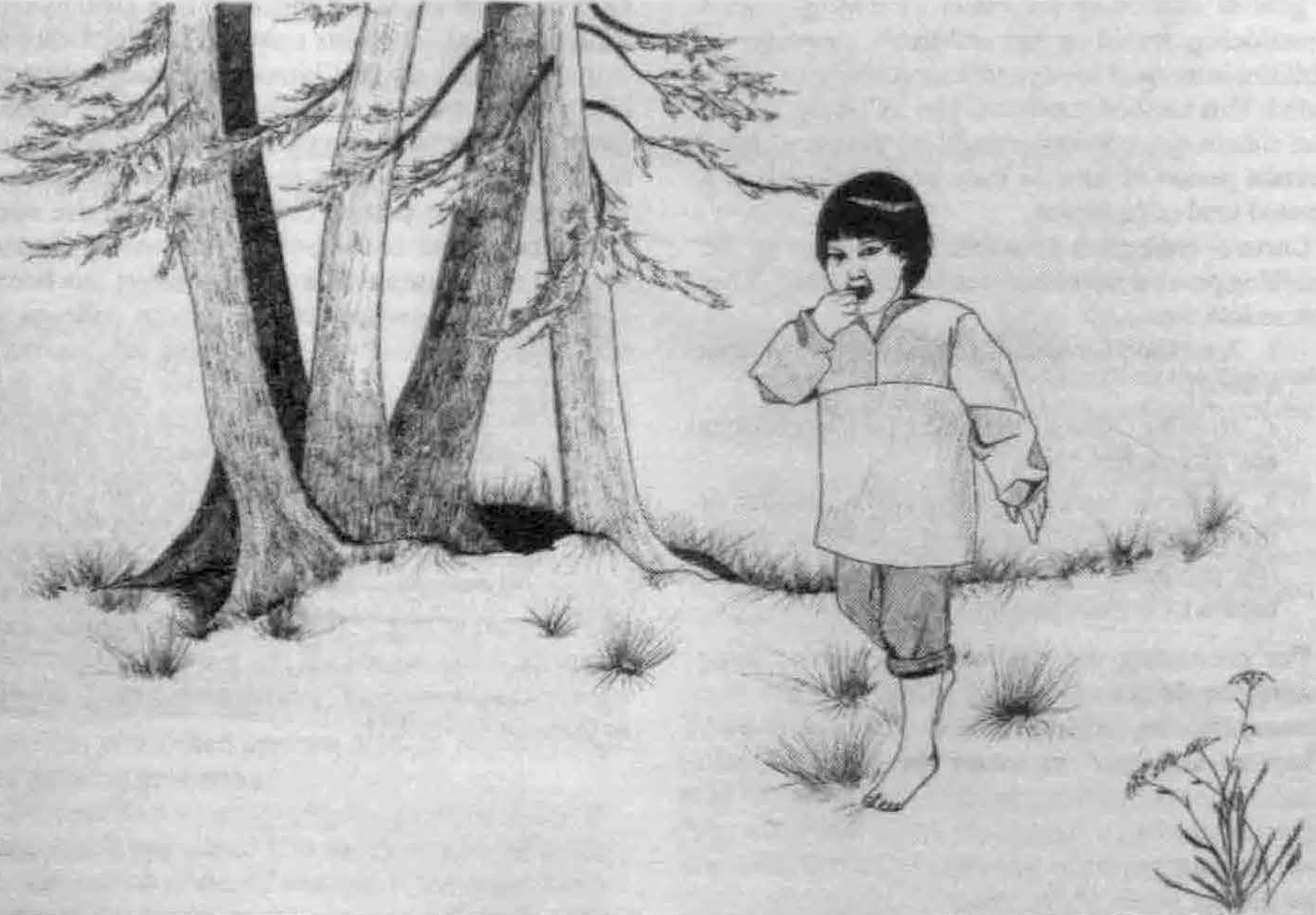
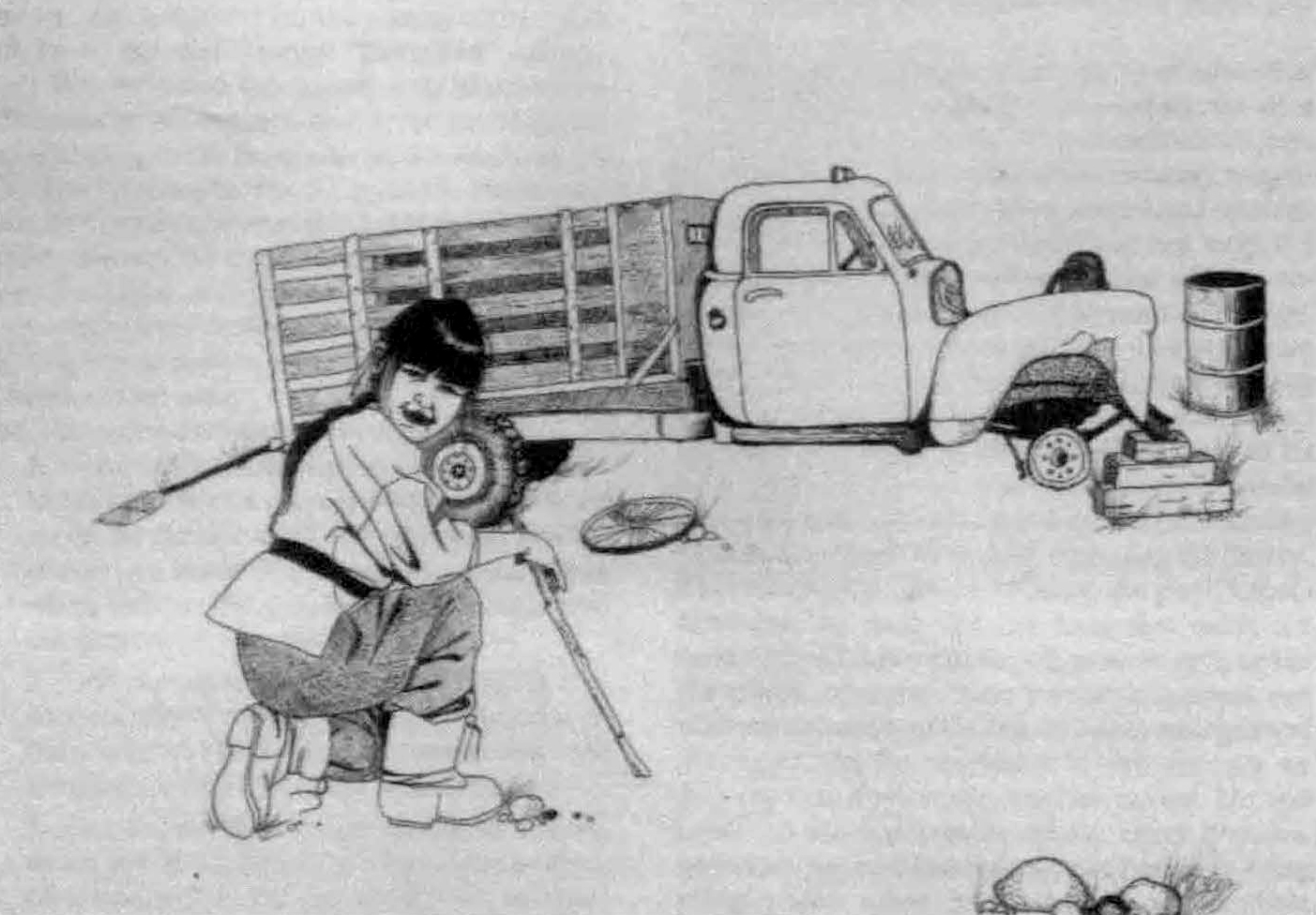
Research: Cellular-genetic energy of students with different modes of learning
Research Institute for medical problems of the North, Krasnoyarsk
Introduction. The purpose of this paper was to study the cellular and genetic energy in different ergonomic modes of educational process: in traditional mode and in the mode of regime of orthograde posture with the use of stand-up desks and small motor activity (ACT).
Methods. The study was executed the metabolic status of lymphocytes of healthy students (8-9 years old) working two years: experimental class (EC) in the ACT mode, the control class (CC) in SPI mode (sedentary physical inactive regime).
Results. The metabolic processes in lymphocytes proceeded feebly in the spring (CC). It was noted (EC) increased activity of succinate dehydrogenase (SDH) and mitochondrial glitserofosfatdegidrogenazy: respectively 55,48% (p<0.001) and by 15.46% (p<0.05). The indicator of monoamine oxidase increased by 100% (p<0.001). The catabolic orientation of metabolism (high level of acid phosphatase – AP) in lymphocytes and neutrophils were predominant (CC). And the ACT mode reduced the level of catabolism (AP) as in lymphocytes and in neutrophils, respectively by 24.2% and 20.6% (p<0.001).
Analysis of SDH in lymphocytes (EC) revealed an increase in the average activity of the enzyme and changes in the structure of the population of immunocompetent cells.
The analysis of the level of fluorescence of monoamines have shown that ACT leads to increased fluorescence of catecholamines by 2.3 times (p<0.001).
The ACT mode leads to the increase of the functional capabilities of the CNS. This is manifested in the growth of the catecholamine-serotonin index by 3.3 times (p<0.001) compared to SPI, which reflects the increasing preservation of conditioned reflexes and transition from short-term memory to long-term one.
The ACT mode leads to a relative increase of functional capabilities of the CNS and reveal an extremely important fact: bodily muscle activity plays a special role in the mechanisms of activation of long-term cellular and genetic memory.
The ACT mode reduced by 2.3 times the leukocytic index of intoxication and increases the percentage of lymphocytes and their ratio to the segmented neutrophils (respectively by 59.5% and the 138.7%; p<0.001).
Conclusions. The level of cellular and genetic activity is directly proportional to the sensory motor activity of the child.
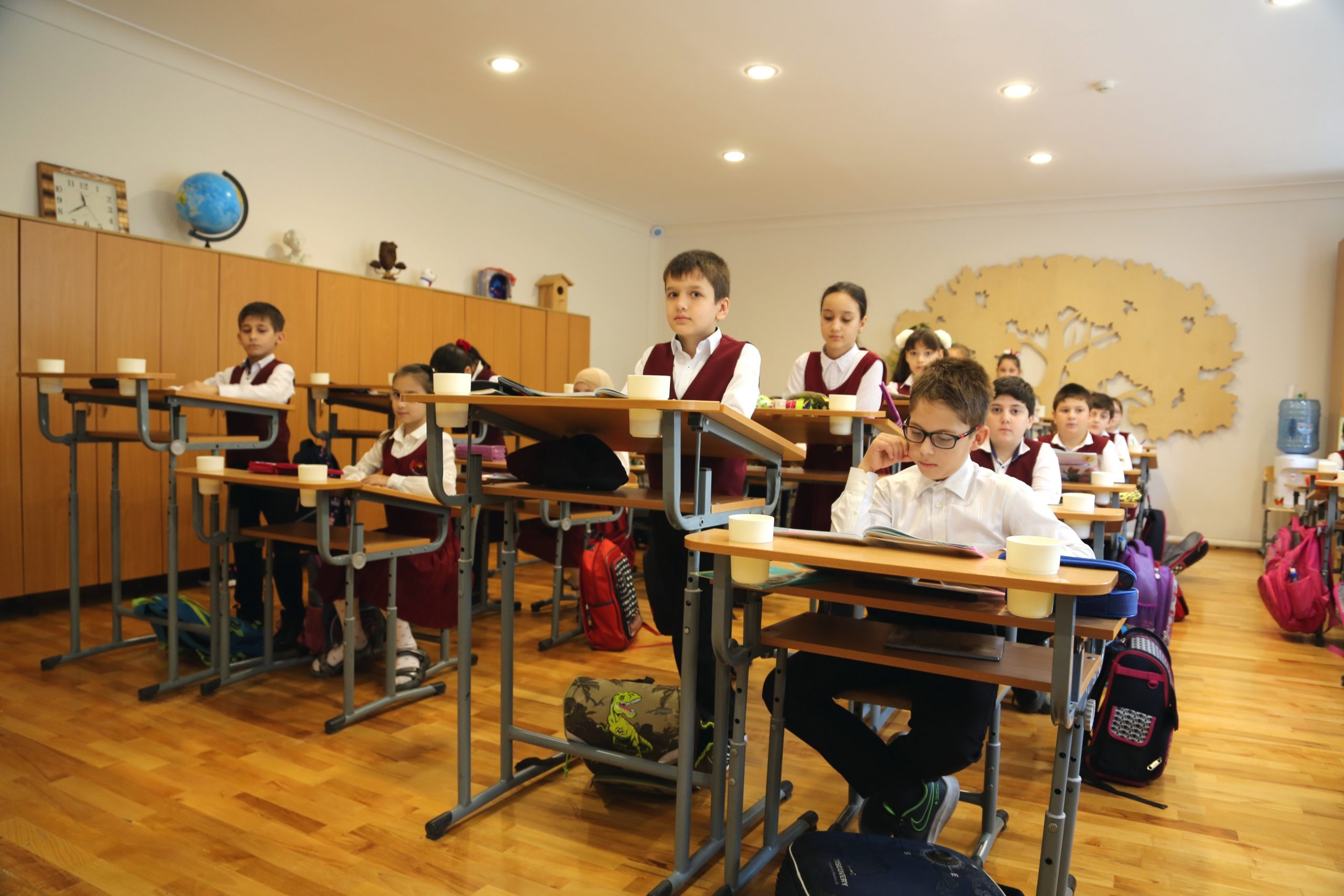
Regime of orthograde posture with the use of stand-up desks and small motor activity (ACT)
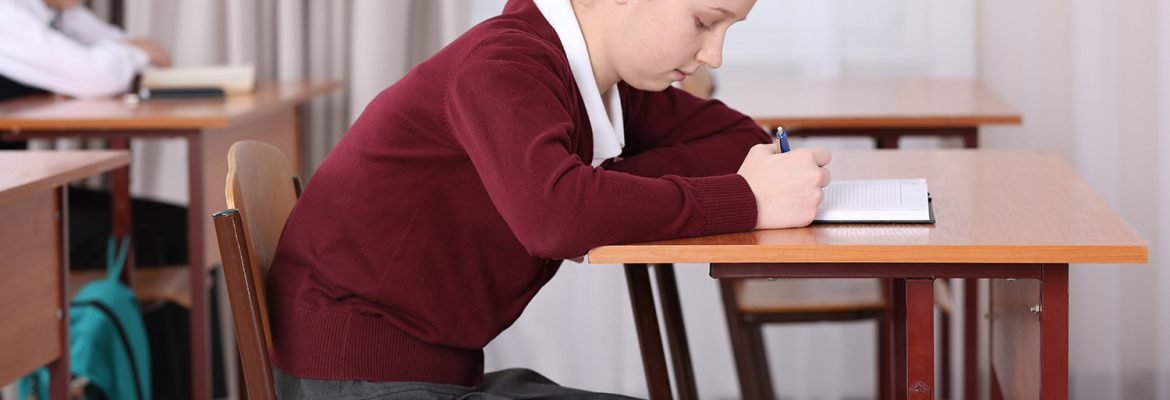
About the saving hosanna and school crookedness, degrading people at the childhood stage
Research Supervisor of the Center for Harmonic Development of Students of RSSU, Moscow, Russia
(Report at the international symposium “Education in Europe for Harmonic Development of Students’’, October, 13-15 2010, Moscow)
Modern schools are the places for mental health clinics (by Jan Eastgate, President of the International Civil Commission for Human Rights),
The dominant feature of the mental disorder is such a state of a person when evidence doesn’t have any influence and no sound arguments are effective (by Hippocrates).
Who of us has ever thought why the epoch of general education began this way, not any other? Why did J.H. Pestalozzi, great Swiss educator-enlightener claimed at the very beginning of the XIX century: bookish education suffocates kids’ development, undermines their health? Why did soon after everyone find out: wan complexion, exhausting migraine, nervous system and psychological disorder, myopia, pince-nez on the nose, crooked back and a stick in the hand became indispensable attributes of the image of young educated people? Why did American doctor Edward Clarke (1867) declare that school “puny bodies” of educated girls lead to mass abnormality of pregnancy and labor and threatens with human devolution in the future? Eventually, the world community had to get together at the World congresses on school hygiene; the first one took place in Nurnberg (1904), the second- in London (1908), the third in Paris (1912). There the most competent authorities acknowledged: pediatric and juvenile scoliosis, myopia, cardiac pathology, nervous system and psychological disorders, etc. – are purely school phenomena.
The most charitable social diagnosis to everything that happens to kids at schools in the conditions of skillfully enforced “book-sitting” model of education, in fact reproduction of the new generations of peoples, was given by the outstanding American psychologist of Pennsylvanian University M. Seligman: “Learned helplessness” in future life.
The more serious social diagnosis to all that happens to children at schools was made by the most competent Western specialists as early as in the 50-ies of the XX century – slow de-hominization (Professor Itten, Madeleine Welz Pagano, Lois Machar and others.)
What is meant here is discovering an epidemic of kids’ mass decrement of that distinctive specific human essence that once wrested us from grasp of the impulsive-situational reflectory-instinctive (animal) world perception and responsiveness and gifted with spiritual views on the world, or in other words, vivid imagination directed into the future.
Anxiety for the future of the modem civilization sounded in the words of President of INZEA society Doctor Edwin Siegfeld (USA) and a member of Board of the second General Assembly in the Hague Ozamo Nuri (Japan): “Whatever the future would bring to the mankind, imaginary education essentially is the only guarantee that the dazed mankind will be able to take shelter from all that disastrous tempests and catastrophes that threaten to devour the whole civilizations”.
But the most amazing here is the following thing: the international conference devoted to the centenary of the first Nurnberg World Congress on school hygiene that took place in Moscow in 2004 revealed the most important things: for the expired century no country in the world disclosed and removed from the academic process the genuine primary reasons for physical and mental health degradation of the new generation.
We devoted 33 years of life to studying the reasons and mechanisms of children’s health degradation in the academic process, including their elimination. And for me the most important matter has become not the one why school degrades down to the bottom physical and mental health (we have made this out), but why, having launched the increasing in generations degradation process of primary base of the family-genealogical trees of human life, we are still “afloat”.
I have come to the following conclusion after many years of research and thoughts on this matter: civilization, having laid “book-sitting” models of education alien to the human nature at the childhood stage, essentially reproduction of new generations, has started to develop as per the strategy of slow adaptive-mutant degradation.
And now about the most important: why we, who had not been given “eyes to see, and ears to hear, unto this day” (Letter of Paul the Apostle to the Romans, 11:8). Or as it’s written in the Koran: “Allah hath sealed their hearing and their hearts, and on their eyes there is a covering. Theirs will be an awful doom” [Sura 2:6(7)].
The question is about abnormal for human nature dominant embryonic crooked academic-cognitive position that school forms.
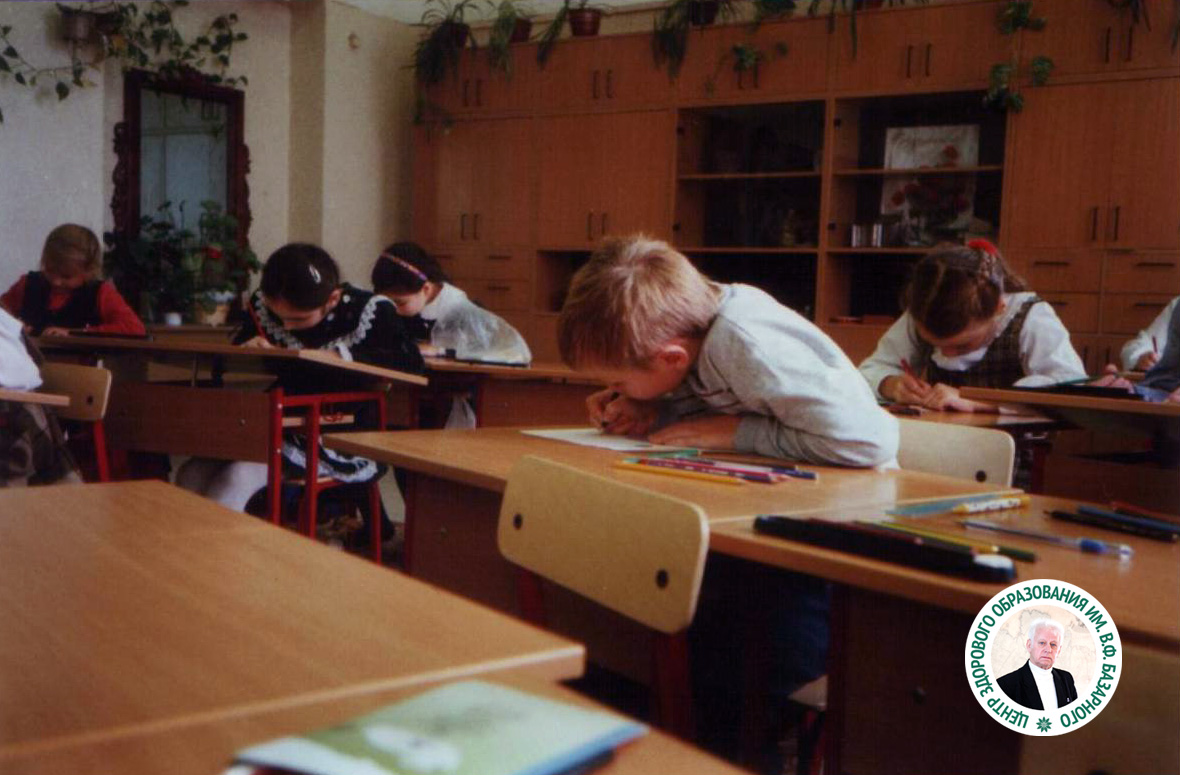
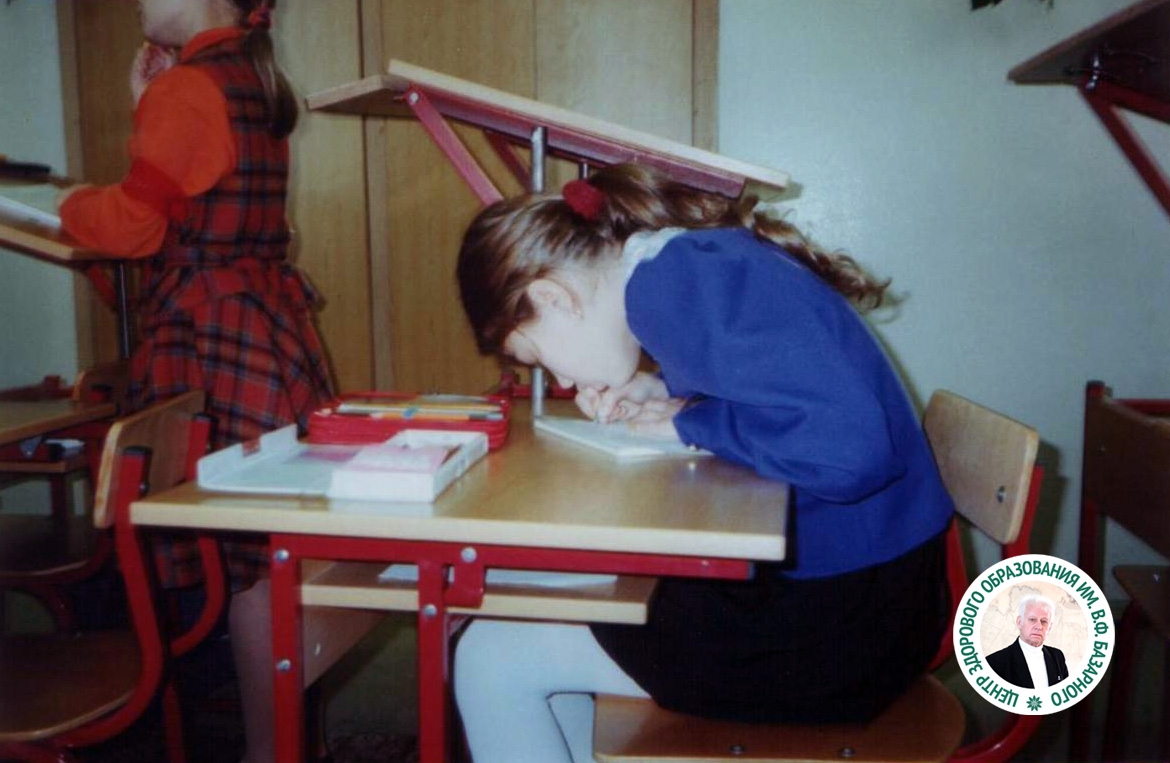
Children all over the world study like this but as a result develop out of shape (excluding schools that introduced our alternative modes of studying). And the matter is not only about the total block of life supporting basic systems (blood circulation and ventilation) in the jaws of static muscle strains, (stresses – according to H. Selye), not only about the chronic cross-clamping of vessels, feeding the brain, and as a result, about development of children in the conditions of chronic brain hypoxia. We found it all out after special research. To the highest degree the matter is about blocking breath liberty and life vivification. I don’t have time to dwell upon it, but from this very position that hyper morbidity and hyper mortality that attacked Russia (and not only Russia) at the end of the millennium, sprang.
And it’s all on the surface. But the deeper destructive processes turned out to be at the endocrine, cellular and genetic levels. The point is that immersion and stay of children in the state of static muscle strain (torpor in the ancient religious teachings) – is the syndrome of all-pervading “short circuit” in the hierarchy of energy-informational outlines of corporal, psychomotor, cellular life. This is the “burnout” syndrome of not only the nervous energy, but of all, thanks to what we once became a species of homo sapiens – energy-informational field genome.
It’s determined that systematic children’s staying in such a position leads to sharp growth of toxins in blood – under-oxidized products of cell dissolution, fall out of calcium ions into calcium salts, substitution of living tissue for bone tissue, etc. And this is nothing else but the age and senescence illnesses placed on fragile shoulders of our kids.
Youth truly differs from age with particular agility and body flexibility. And age is different from youth by stiffness and crookedness. And death differs from life with body immobility.
As a confirmation of all mentioned above let us take one of the developed and cultural Western countries, where special attention is given to children’s development and education – Norway. I quote the competent Norwegian specialist H. Seyffarth (1980):
“…Axis knot in the region of the neck is the most widespread reason for pains in nape and arms. Knots of the lowest lumbar vertebrae have a great influence on emergence of lumbago and ischias that we observe at adult stage… Knots are connected with the degree of stoop…
The research shows, that about 80% of all children, including school graduates have wrong poise…” Let us think: 80% of young people, entering upon life, possess defective epicenter of life and health – axis. And the same thing occurs all over the world.
And after all this we are surprised: why today from 2/3 to 4/5 untimely deaths of able-bodied people fall at cardiovascular system illnesses? Hereby we have established: with such education dysfunction of the cardiovascular system is detected with 26% of children only during the first year of studies. And after the primary period of studies – with 65% already. And finally, according to the data of the Children’s Health Research Center under the Russian Academy of Medical Sciences (academician Baranov A.A., 1997) dysfunction of cardiovascular system among the senior pupils of elite Moscow schools is detected already in 90% of cases.
This is the pedagogical base for further human dying-out from cardiovascular system disorders. And it means that annually we handle bouquets of flowers to our kids tenderly for their… future cemeteries… But how we long for keeping our smart image, how we want to hide our heads into the sand from these merciless facts.
I’ll make a point of it. The tragic processes have touched upon schoolchildren’s spiritual and psychic sphere. Not me, but the Ministry of Education and the so-called Science of the Russian Federation in their official letter (no 220/11-12 dated 22.02.1999) brings the results of their everlasting reforms to the attention of the public: borderline mental disorders become apparent among 60-70% of kids after only one year of studying (?!). And there are 9-10 years of such mind-numbing years of studies ahead.
The research has established: under the conditions of static muscle strains there appears a syndrome of jamming-up, distortion, and decay of senses of images, utilized into memory, on the basis of which the inner spiritual figural imaginative world conceptualization is formed.
At such moments kids and teenagers feel unmotivated panic fear and aggression, and as a result, unmotivated dramatic acts. Many assassinators, the epidemic of which is growing in many of the so-called civilized countries, claim: at that moment something got jammed-up in my head. Here are a few examples of drawings from an international exhibition of children’s drawings.
It’s been determined that “stressogenic” visually small working distance turned out to be absolutely steady for each student during the whole academic year. It reflects evolutionary significant synthesis between the visual organ and a hand. The synthesis, due to which people acquire the ability to “fly” into the future “on the wings” of the creative imagination. That’s why one failed to get it through for 200 years of general education. As our researchers established its main reasons were that we pulled out gravitation support points out of corporal- axial balance, on the base of which a child was learning the ability to measure and dose the efforts constructing consciousness – actions. At the same time school actually walked off from the physiological ergonomic techniques of formation of the plastic handwriting, devoid of convulsive features — clams, steady sensible discourse, intentional reading, etc.
And only from the position of opening our eyes and perceiving the facts mentioned above (I repeat, the facts, not opinions,) one will be able to realize the tasks and objectives of replacement of the “book-sitting”, bone-motionless model of the so-called education, and actually cognition of life with dead letters, numbers, schemes, “cognition” of the virtual-abstract world for alternative models of education. The thing is on construction of the academic process in the regime of triune activity of body, senses and creative searching mind, corresponding to the nature of the developing child. In fact, it’s about adding the evolutionary- significant regime of corporal sensual system learning activity to the educational process, and as a consequence, long-term perfection of the body, soul, brain and its functions directed into the future.
Technologies and technological tools of their realization are protected with 44 patents for invention and ware models. The program is approved and recommended by Ministry of Health of the Russian Federation and got a sanitary and epidemiological certificate of the Russian Supervision Agency for Health and Consumer Rights (No. 77.99.95.3.T.000674.07.01). And, in spite of the fact that the program is mainly introduced due to enthusiasm of individualists, nevertheless, so far, more than 3,000 schools in Russia, Ukraine, and Byelorussia use different fragments of this program.
Long-term results give hope. The thing is that one managed to suppress the formation of known and habitual to us school pathological forms (scoliosis, myopia, nervous and mental disorders, cardiovascular disorders, etc.) in the process of education for the first time for the epoch of book-sitting general education.
Of course, this work demands mass initiatives of teachers and parents. But it particularly demands the state policy in correcting goals and objectives of all the system of education.
It’s known: Holy Scriptures begin with warning to the peoples of Adam and Eve civilization of the forthcoming threat of our destruction from the “cognition”. Genius I.V. Goethe tried to bring light to us, self-reliant and very clever in our own eyes, that for profanes the formula of destruction from “cognition” had remained the secret locked behind seven seals for millennia:
Yes, “know”!
–
Men call it so, but then
Who dares to call the child by its right name?
The few who have some part of it descried,
Yet fools enough to guard not their full hearts, revealing To riffraff both their insight and their feeling, Men have of old burned at the stake and crucified.
And at the same time, the evil one sings from the left shoulder, putting a tongue to us, self-reliant, and rubbing his hands: «No, the outcast hunchback with a curse on his brow
I will never be happy on earth»
(Notre-Dame de Paris)
And so far profound words by the great Swiss thinker-educator Ferriere have sounded like an alarm bell over us for the whole century:
‘”And they created school the way devil told them. The child loves nature, that’s why he was locked in the four walls. The child likes to realize that this work has some sense, that’s why everything was organized t in such a way that his activity would not bring him any use. He can’t stay motionless — he was made to stay immobile. He loves working with hands, and was taught to theories and ideas. He loves talking, and he was ordered to keep silence. He aims to understand— he was told to learn by heart. He would like to search for knowledge himself— he is given it ready for use.
…And then children learnt something they would have learnt under other conditions. They learnt to lie and pretend.
And what happened next. As devil wanted it, some people withered, became flabby and passive, lost any interest for life. They lost happiness and health. Love and Kindness disappeared. Thought became cool and dull, souls got stale hard, and hearts soured.
And school that the devil so skillfully imagined, went to pieces ”.
In conclusion let express gratitude to PACE management for the honor to deliver a speech at the session of the Committee for Science, Culture and
***
Education. I want to express gratitude on behalf of thousands of children to Sergey Mikhailovich Mironov, Head of Federation Council, leader of the party “Just Russia” for the constant attention to this problem, for that he was the first of the Russian political leaders who handed personally health developing educational technical products to children. And the special thanks to his Adviser, Chairman of the Russian Union for Healthy Development of Children, to a great friend and defender of our kids Anatoly Antonovich Korobeynikov and his deputies Berchun V.V. and Zaitsev V.I. And my obeisance to all the practicing teachers and directors of educational institutions, who have taken upon themselves the care of healthy harmonic development of children in the immediate academic process. I thank everyone present here for your attention.
Книга профессора В.Ф. Базарного «Дитя человеческое» на английском языке
Теперь книга профессора В.Ф. Базарного «Дитя человеческое: психофизиология развития и регресса» доступна и для англоязычных читателей со всего мира.
17 июня вышла в свет электронная версия книги на английском языке в крупнейшем интернет-магазине Amazon.com, затем появится и печатная версия, которая будет доступна для жителей США, Канады, Мексики, Австралии, Японии, Бразилии, Индии и всей Европы.
Большая просьба к подписчикам. Если у вас есть аккаунт на Amazon, оставить оценку и отзыв на книгу (если, конечно, вы её читали на русском языке).
Страница В.Ф. Базарного в интернет-магазине Амазон.
С краткой биографией и фильмом “Обездвиженность – болезнь цивилизации на английском языке” https://www.amazon.com/
Электронная книга “Дитя человеческое” на английском языке
The Human Child: Psychophysiology of Progress and Regress [Print Replica] Kindle Edition
ISBN 9798654270788
Электронная книга доступна для покупки в следующих национальных интернет-магазинах по всему миру:
США
https://www.amazon.com/dp/
Австралия
https://www.amazon.com.au/dp/
Япония
https://www.amazon.co.jp/dp/
Великобритания
https://www.amazon.co.uk/dp/
Германия
https://www.amazon.de/dp/
Франция
https://www.amazon.fr/dp/
Испания
https://www.amazon.es/dp/
Италия
https://www.amazon.it/dp/
Бразилия
https://www.amazon.com.br/dp/
ٍКанада
https://www.amazon.ca/dp/
Индия
https://www.amazon.in/dp/
Мексика
https://www.amazon.com.mx/dp/